

Diesel Polishing vs. Fuel Replacement: What Facility Managers Need to Know
Stored diesel fuel is the lifeblood of backup generators, marine fleets, and other critical power systems, but it doesn’t stay pristine forever. Over time, water, sludge, sediment, and microbes accumulate, raising the risk of clogged filters, injector fouling, lost efficiency, and emergency-time failures. For facility managers, the core decision is simple but consequential: polish the fuel back to spec, or replace it entirely. This comprehensive guide explains what diesel polishing is, when full replacement is truly warranted, why polishing is preferred in most scenarios, and how to set a maintenance cadence that keeps fuel reliable while controlling costs and environmental impact.
1) The Diesel Polishing Process
Diesel polishing is an advanced, multi-stage circulation and filtration process that removes free water, emulsified water, particulates, and biomass from stored fuel while it remains in the tank. Rather than a one-time drain or sump, polishing recirculates fuel through progressive filtration (and water separation) to restore it close to “like new” quality, improving clarity (“bright and clear”), stability, and combustibility. Done correctly, polishing reduces downtime, prevents premature filter plugging, and helps engines run cleaner and more reliably during load events.
Industry definitions describe polishing as the technical cleaning process that recirculates fuel and removes water, sediment, and microbial contamination. This contamination—often referred to as “fuel bugs” or “diesel bugs”—builds up over time in stored diesel that isn’t regularly tested and maintained, especially where condensation creates a water layer that microbes can inhabit and feed upon.
As Paul Lewis, Duthie Power’s Safety and Quality Assurance Coordinator, explains, “Water is diesel fuel’s worst enemy. By consistently polishing fuel on an annual basis, you can extend the life of the fuel. Keep in mind, though, that fuel polishing does not improve the Cetane rating. When diesel goes bad, there is no saving it.”
Reputable service providers emphasize the restoration angle and the significant operational savings versus replacement. When contaminated fuel can be recovered to spec, organizations avoid not just buying thousands of gallons of new diesel, but also the logistical and environmental costs of disposing of the old fuel.
Key Takeaways
- Polishing = recirculating, multi-stage filtration while fuel stays in the tank.
- Targets water (free/emulsified), particulates, and microbial byproducts.
- Restores clarity and stability; reduces filter clogging and downtime.
- Often delivers “near-new” performance without buying new fuel.
Quick Takeaways: Polishing is proactive, cost-effective, and minimizes downtime by cleaning fuel in place—ideal for generators and other mission-critical systems.
2) When to Replace Diesel Fuel
While polishing solves the majority of storage-related quality issues, there are cases where fuel is too far gone. Examples include years of neglect, significant water ingress, severe microbial infestation, or contamination that has chemically degraded the fuel beyond recoverable limits. In such edge cases—confirmed by testing—replacement becomes the prudent choice to protect engines and ensure compliance.
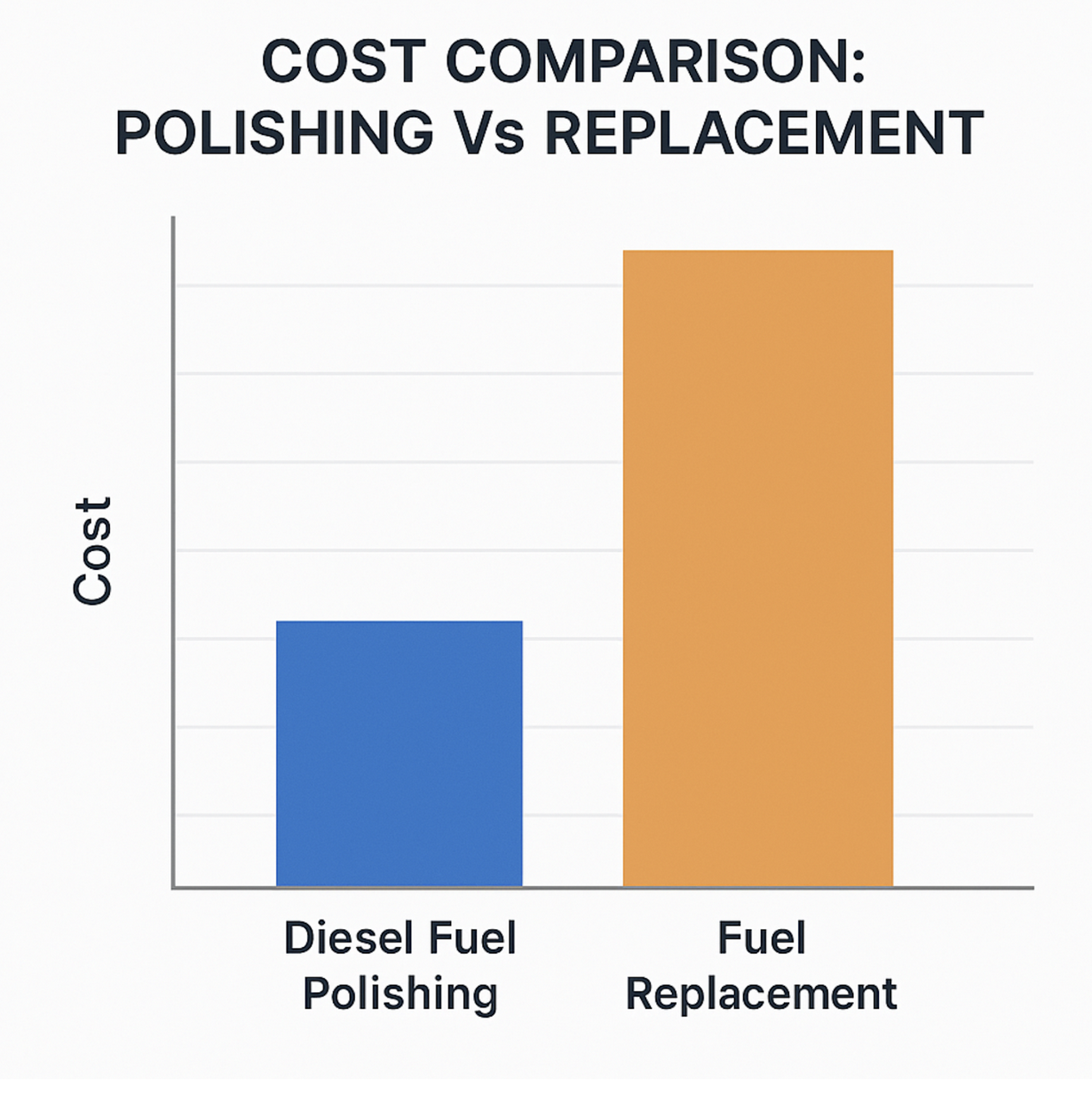
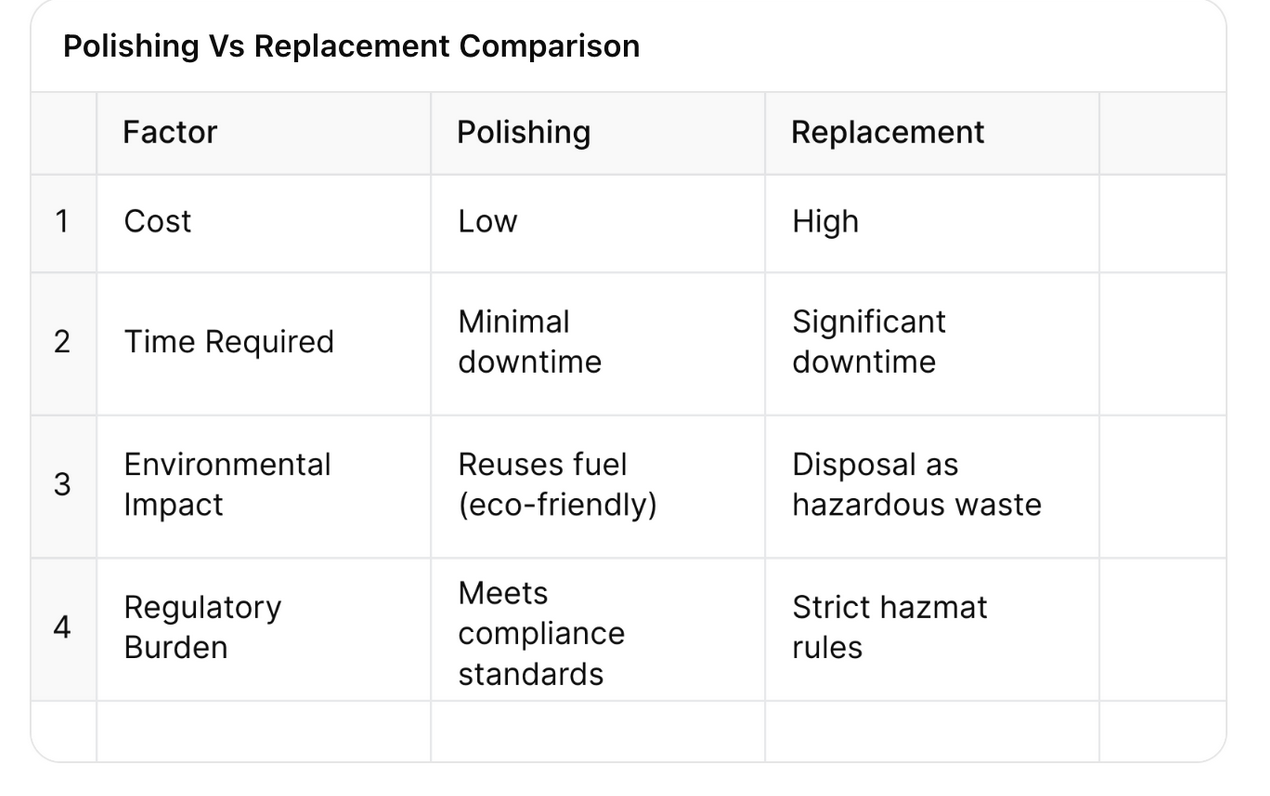
Full replacement, however, is not trivial. Organizations must pay for new fuel, arrange pumping and transport, and handle disposal of the contaminated fuel—often under hazardous-waste controls depending on conditions and jurisdiction. The costs and coordination quickly escalate, which is why replacement is best reserved for only the most extreme scenarios verified by lab results and professional inspection.
“Replacing diesel fuel is costly and labor-intensive… making it the least desirable option for most businesses.” — Peter Thornton, Duthie Power Sales Engineer
Real-world project examples illustrate the magnitude: filtering and restoring large contaminated volumes can save hundreds of thousands of dollars versus buying fresh fuel and disposing of the old stock—savings that don’t even include avoided downtime or environmental risk premiums.
Key Takeaways
- Replace only when fuel is beyond recovery (extreme water/microbial damage).
- Replacement includes purchase of new fuel plus disposal logistics.
- Environmental and regulatory steps can materially increase costs.
- Confirm with testing before choosing the most expensive path.
Quick Takeaways: Replacement is a last resort. Verify with testing first; polishing usually solves the problem faster and cheaper.
3) Why Diesel Polishing Is the Preferred Solution
From a total cost of ownership standpoint, polishing wins because it eliminates unnecessary fuel purchases and the chain of costs that come with hazardous disposal. It also directly supports sustainability goals by reclaiming existing resources and reducing waste. For facilities with zero tolerance for downtime—data centers, healthcare, public safety—polished fuel underpins reliable generator starts and load acceptance when it matters most.
Operationally, clean fuel protects injectors and after-treatment systems, helps maintain expected emissions profiles, and extends component life. Industry guidance and service providers alike summarize the benefits succinctly: better performance, fewer failures, and more reliability across the board when fuel quality is actively managed.
Most importantly, polishing aligns with compliance and quality frameworks by keeping contamination in check before it triggers bigger problems. Regular testing (e.g., particulate counts, water/sediment, and microbial indicators) informs when polishing is due and validates the improvement afterward.
Key Takeaways
- Cost: Avoids buying new fuel and paying for disposal.
- Sustainability: Reuses existing diesel; reduces waste footprint.
- Reliability: Better cold starts, load handling, and runtime.
- Compliance: Keeps fuel within spec; supports audits and standards.
Quick Takeaways: Polishing is the financially smarter, greener, and more reliable way to maintain stored diesel.
4) Best Practices & Service Frequency
Adopt a preventive schedule: for most standby applications, plan to polish every 6–12 months, with cadence adjusted for climate, tank condition, and uptime criticality. Humid or high-swing temperature environments warrant more frequent checks because condensation accelerates water accumulation and microbial growth. Pair polishing with routine fuel quality testing to catch issues early and prove results after service.
Practical testing touchpoints include visual clarity checks, water/sediment measurement, particulate counts, and microbial assessment. Suppliers and labs commonly reference ASTM methods for particle sizing/counting and microbial guidance. The key is to baseline, trend, and trigger action before contamination reaches levels that jeopardize reliability.
“For most applications, experts recommend polishing fuel every 6 to 12 months, depending on storage conditions and usage.” —
Duthie Power
If tests indicate pronounced microbial activity, combine polishing with appropriate tank hygiene (e.g., water bottom removal) and—where indicated—chemical biocide per manufacturer and regulatory guidance. Remember that mechanical filtration removes biomass and water, but microbes can persist on surfaces unless the underlying environment (water + nutrients) is addressed.
Key Takeaways
- Set a polishing interval (6–12 months) and adjust to risk profile.
- Test regularly (water/sediment, particles, microbials) to trigger action.
- Remove water bottoms; treat microbes when indicated; re-test to verify.
- Document results to support reliability, audits, and warranty claims.
Quick Takeaways: Preventive polishing + testing beats emergency fixes. Address water and microbes at the source for durable results.
Polishing First, Replacement Last
Diesel polishing is the smart, sustainable default for maintaining high-quality stored fuel. It restores usability, protects engines, reduces emissions risk, and avoids the financial and environmental burden of full replacement. Reserve replacement for the rare, verified cases where fuel is genuinely beyond recovery. With a disciplined program of routine testing and a 6–12 month polishing cadence, you’ll extend fuel life, cut costs, and ensure your standby assets perform when they’re called upon.
Key Takeaways
- Polishing restores fuel quality without tank draining or major downtime.
- Replacement carries purchase + disposal costs; avoid unless necessary.
- Testing validates decisions and documents reliability improvements.
- Proactive schedules keep generators ready and compliant.
Need professional Diesel Polishing?
Schedule service with Duthie Power Services or call 1-800-899-3931.


